Marine Resources Council's Monthly Email Newsletter |
|
|
LETTER FROM THE EXECUTIVE DIRECTOR |
|
|
Dear Patricia, Decades before I started working to protect the Indian River Lagoon, I was trying to understand the lives of extinct seabirds and what their population dynamics could tell us about ancient ecosystems. My dissertation focused on a group of big, goofy, extinct seabirds called Hesperornis. Although they are not directly related to any birds living today, you can think of them as six-foot long cormorants with teeth that couldn’t fly.
One of my primary research questions was whether I could use their bones to determine whether they migrated. (Find the answer here.) However, it didn’t take long to realize that fossils alone couldn’t give me the full picture. I had no way of interpreting my results without first understanding what migratory (or sedentary) behavior looks like in modern bird bones. To understand the past, I needed a present-day comparison. Penguins became my model organism, thus beginning my (slightly unhealthy) relationship with birds.
Up to that point, my undergraduate and Master’s research had focused on terrestrial (land-based) ecosystems. Marine systems were entirely new territory for me as a scientist. As a result, I spent a lot of time playing catch-up learning about the interrelatedness of geology, biology, chemistry, and physics in the marine realm. Early on in my studies, I read a paper titled “Penguins as Marine Sentinels,” that shifted my perspective on the interaction of animals with their environment.
An ecological sentinel is a species that is both observable and sensitive to environmental change. Seabirds are particularly powerful sentinels because they are mobile, feed high on the food web, and integrate conditions across large geographic areas. Their breeding success, migration timing, diet, and population trends can reflect water quality, prey availability, climate shifts, and even the accumulation of toxins. (Read more about this here.)
A prime example is the decline in Florida osprey and brown pelican populations in the 1960s and 70s due to DDT pesticides. Long before we fully understood the chemistry, birds were signaling that something was wrong in their environment as their reproductive rates plummeted. Today, shifts in seabird migration, diet, and colony stability can similarly alert us to the dangers of warming waters, overfishing, pollution, or nutrient imbalances.
Along the Indian River Lagoon, seabirds are quietly reporting on the Lagoon’s health every day. When fish populations decline because of algae blooms or habitat loss, seabirds feel it immediately. When toxins build up in their diet, reproduction rates fall. Because birds respond quickly to environmental change, tracking them gives us valuable insight. This is why large-scale citizen science efforts like eBird are so important. The massive amount of data contributed by casual (or not-so-casual) birders help scientists detect population changes faster and more accurately.
Here at MRC, we have collectively entered our Birding Era— not just because birds are awesome, but because they help us tell the larger story of ecosystem health. From turning the Ted Moorhead Lagoon House into an eBird hotspot to restoring rookeries and water quality, our bird-related work is directly connected to our core mission. When we protect habitats, reduce pollution, and advocate for smarter stormwater solutions, we are strengthening the entire food web. So I invite you to watch the seabirds. If seabirds are our sentinels, then it’s up to us to respond to what they’re saying.
Thanks for being part of our nest, |
|
|
Dr. Laura Wilson Executive Director |
|
|
Fall in Love with Birding Intro Birding Workshop |
|
|
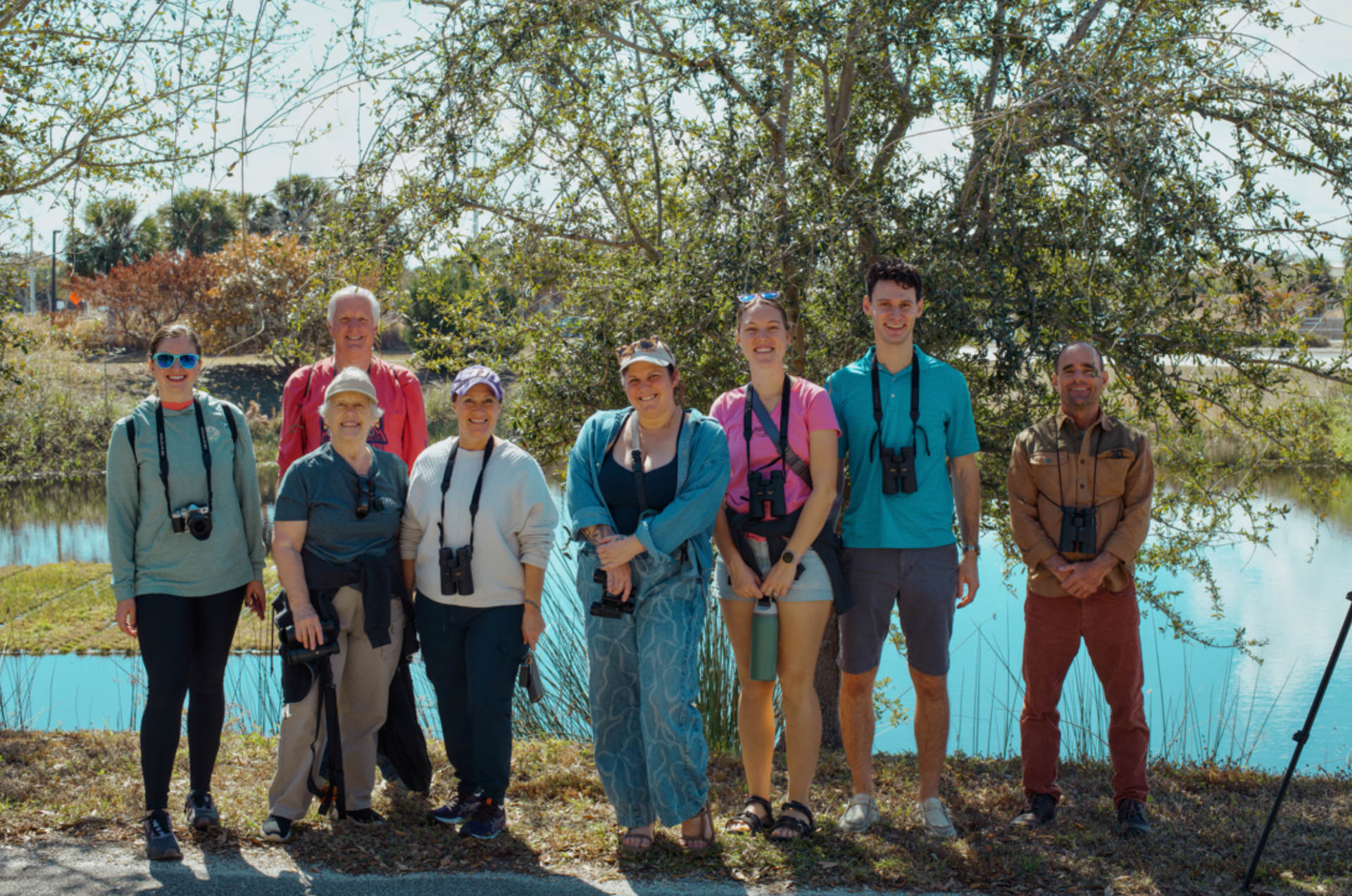
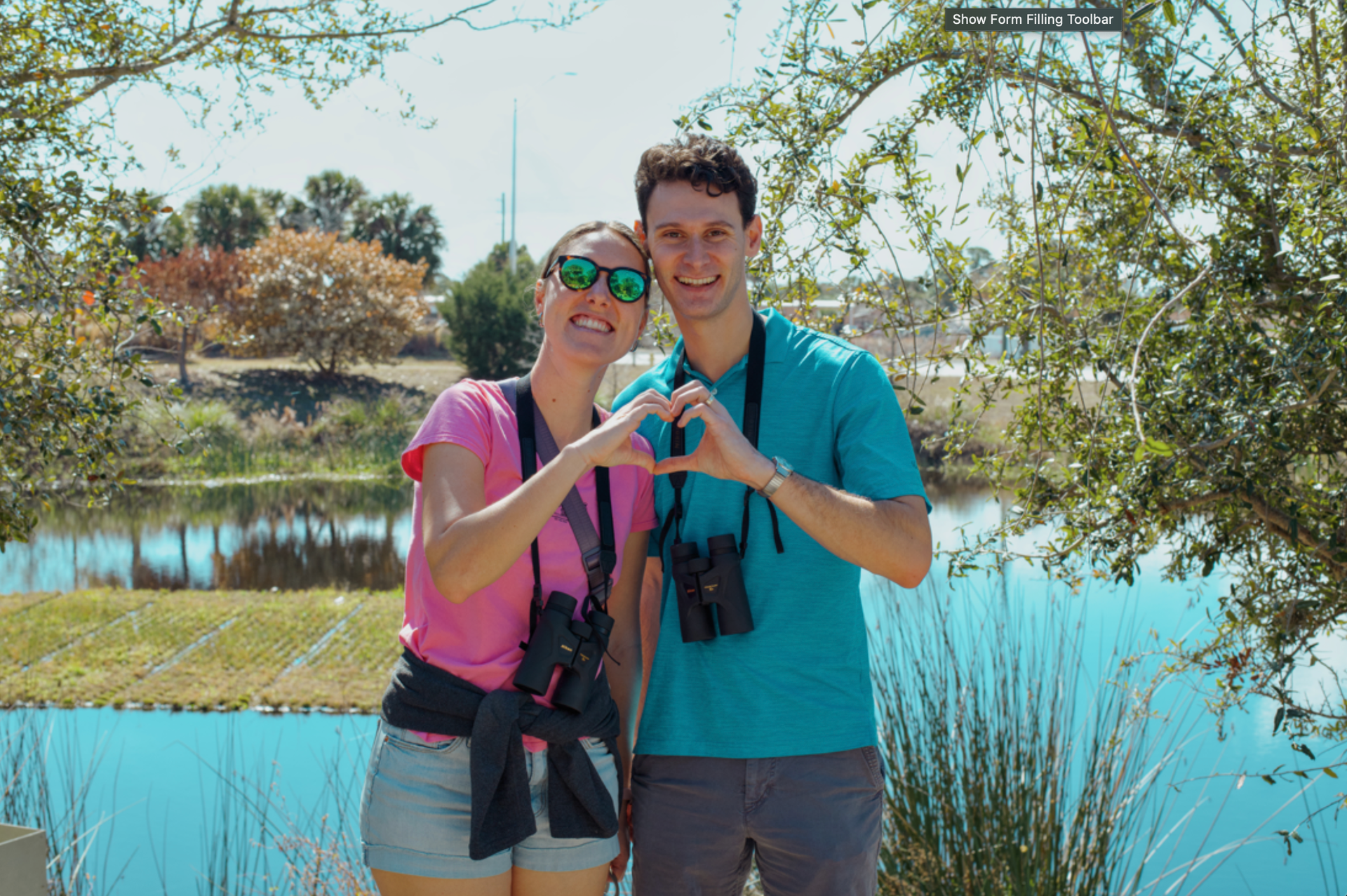
February was all about the love birds...the ones that we got to see at the Lagoon House during our Introduction to Birding Workshop, that is! Over 40 attendees flocked to Palm Bay on Saturday, February 14, to learn what the birding hype was all about. In addition to a stellar presentation by Matthew Anderson, an ornithologist with the Florida Department of Environmental Protection, attendees attended sessions on technology, photography, and identification. We spotted several species at the workshop, including mourning doves, cardinals, ospreys, and great egrets. Since the workshop was the same weekend as the Great Backyard Bird Count, we encouraged folks to track the birds that they heard and saw using the eBird and Merlin apps. If you are an avid eBird user, you'll notice that the Ted Moorhead Lagoon House is an eBird hotspot! Staff tracks the birds that we see on the property weekly, and you can keep reading below to see our quarterly bird sampling results! If you attended the birding workshop, we would love your feedback! Check out our post-event survey to let us know what you thought. We hope to host more workshops to foster a love for wildlife and native species of the Indian River Lagoon watershed. Reply to this email with what kind of workshop you would like to see next! |
| |
|
Read the Special Report: Data Center Development |
Impacts of Data Center Development on Florida Communities: Issues for State and Local Policymakers |
There are several data center bills making their way through the Florida Legislature this session. Notably, HB 1007 was recently voted 24-1 by the State Affairs committee and seeks to address data centers' electricity and water usage. Data centers can affect rural communities in Florida and water quality. We invite you to read the Special Report published by the 1000 Friends of Florida to stay informed. Staying informed on new issues can help when contacting your policymakers about new bills. Read the report by clicking the button below. |
| Indian River Lagoon and Upper St. Johns River Basin Plan |
Act now to submit your comment! |
The Indian River Lagoon and Upper St. Johns River Basin Plan is published on the St. Johns River Water Management District Website. Strategic Planning Basin Coordinators are accepting public comments on the report through March 18th. The Basin Plan details planned capital projects. Click the link below to read the report and provide a comment!
|
|
|
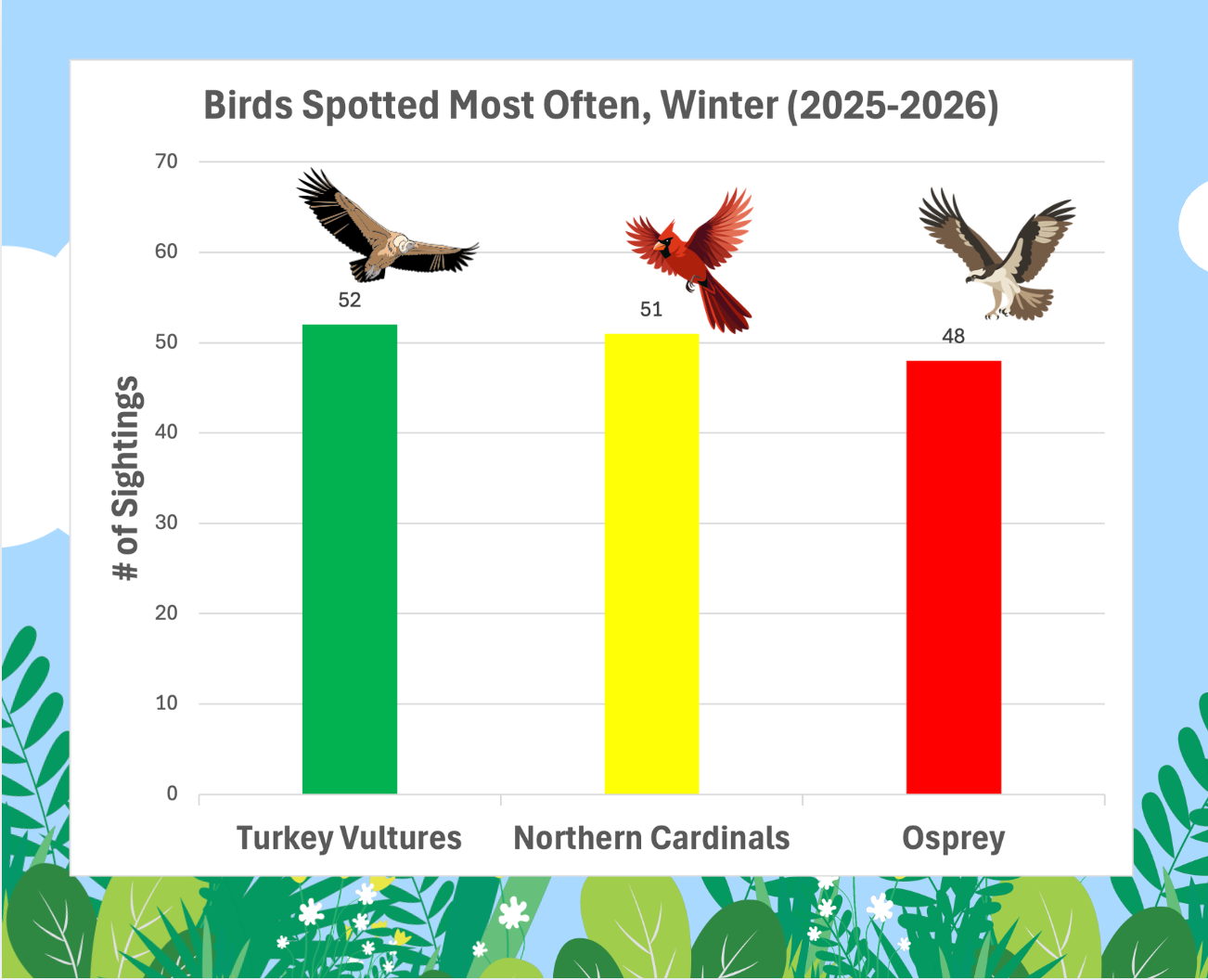
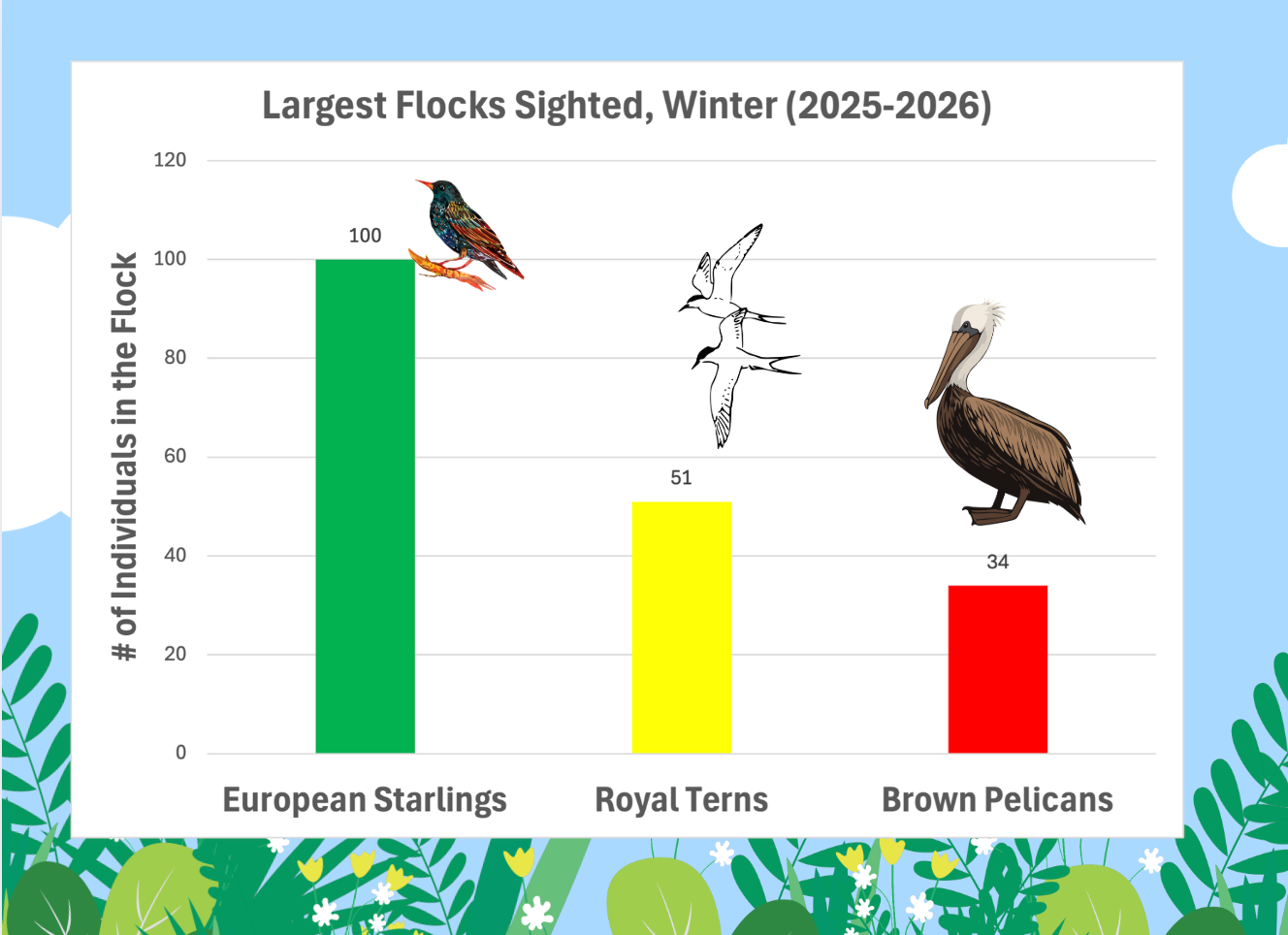
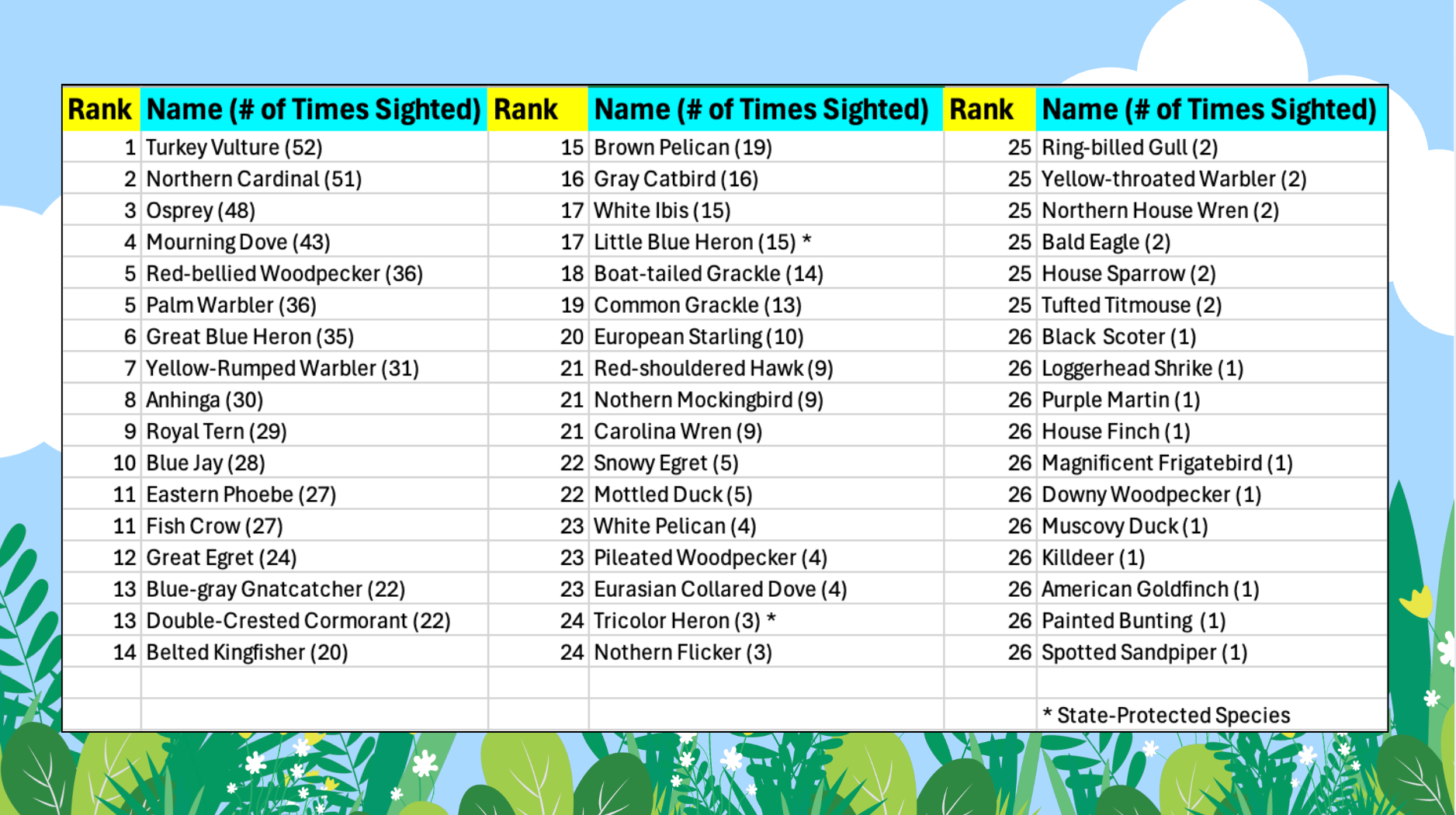
If you're into birding, you're probably familiar with the citizen science app, eBird. As Dr. Wilson mentioned in her opening letter, eBird is a conservation tool that is used by scientists around the world to monitor bird movement and populations. Here at Marine Resources Council, we love citizen science. We've been contributing to the eBird app by logging the birds that we observe throughout our days at the Ted Moorhead Lagoon House. We can use these data to see how migration patterns change throughout the year, who frequents the Ted Moorhead Lagoon House, and how sightings might change over time. For our newsletter, we'll be including seasonal summaries of the birds that are observed at the Lagoon House. You, too, can contribute to these data set by filling out an eBird checklist and tagging your location at the Ted Moorhead Lagoon House. If you're interested in learning how you can contribute, email Brooke Blosser at brooke@mrcirl.org to schedule a tutorial! In the meantime, check out our Winter Summary data. Feel free to respond to this email and let us know what you think! |
| |
|
| LagoonWatch Monthly Report |
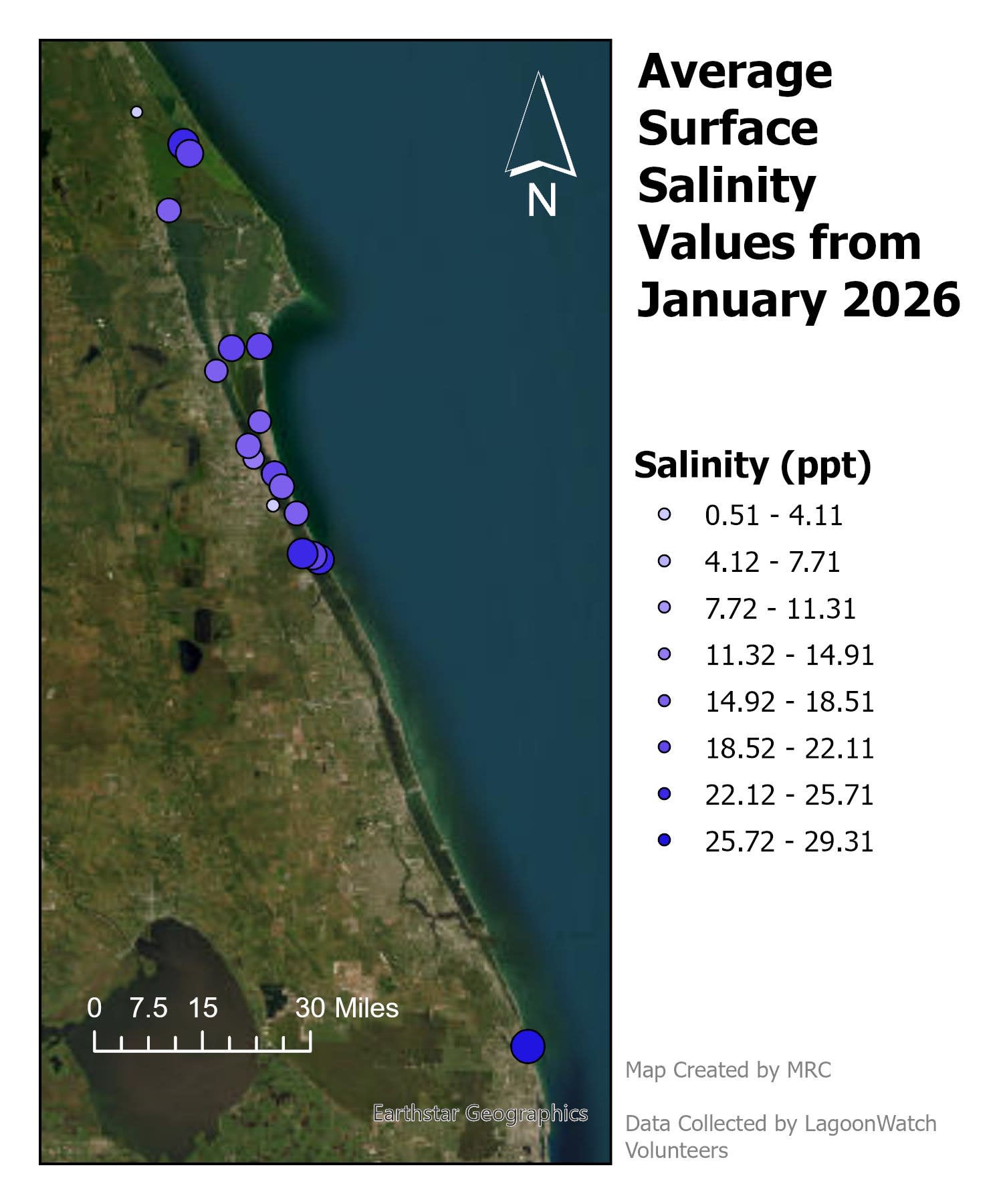
January's LagoonWatch Report features the surface salinity values. Salinity values in the lagoon were, on average, higher in January than in the previous month. Prolonged drought conditions increase salinity as there is little to no freshwater input from rainfall. Also, evaporation, the process by which water re-enters the atmosphere, still occurs during a drought. As liquid water becomes gaseous once again, it leaves the salts behind, further increasing the salt concentration in the estuary. Although the observed salinity values are higher in January than in December, this is not necessarily cause for concern. Click below to view the rest of the LagoonWatch maps! |
|
|
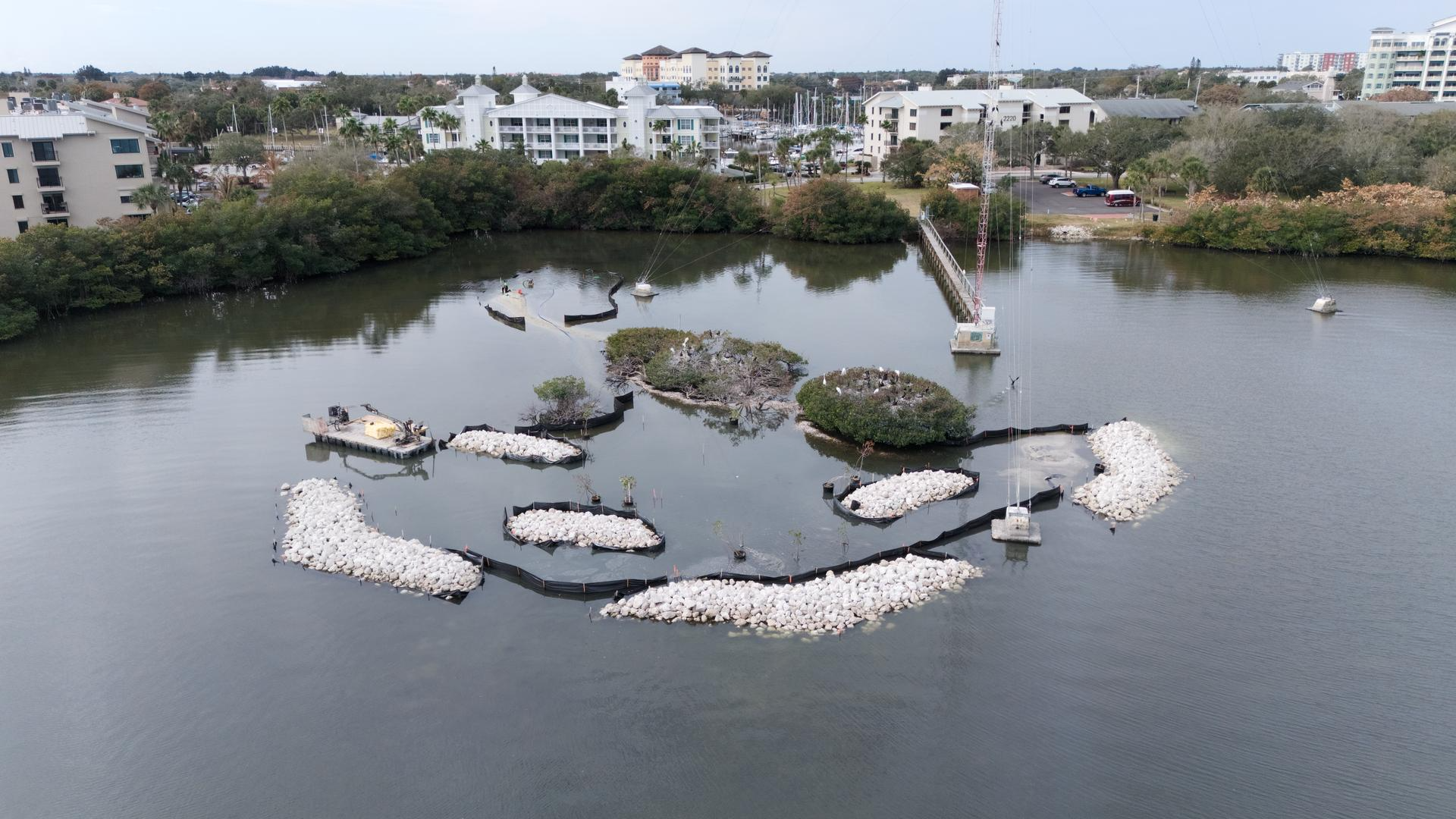
If you've been around Front Street Park in Melbourne, FL recently, you may have noticed some heavy equipment. And a few changes. Marine Resources Council has partnered with Florida Fish and Wildlife Conservation Commission, Aquatic Preserves, and the Brevard Zoo to restore a small (but mighty!) wading bird rookery near the boat ramp. Over the decades, this island has eroded to a fraction of it's original size despite still hosting sixteen species of birds. Throughout February, a construction crew configured a series of breakwaters to protect the island from further erosion. Sediment was added behind the breakwaters to restore the above-water area available for nesting and foraging habitats. Ten large (10+ foot tall) red mangrove trees were planted as the sediment fill was added to start reestablishing the tree canopy. After nesting season, we'll add 65 or more smaller mangroves, along with cordgrass and sawgrass, to round out the habitat restoration. In addition to the physical restoration of the island, MRC's restoration team is collecting water quality data, sediment changes, and species diversity (both on the island and in the sediments) to monitor how the ecosystem changes through the restoration process. This is a two-year project to help inform not only the success of this project, but guide future restoration projects along the Lagoon. We're so excited to see this restoration project come to life. If you want to get involved, keep a look out for a call for volunteers to help with planting mangroves later this year! |
|
|
LOW IMPACT LIVING TIP OF THE MONTH |
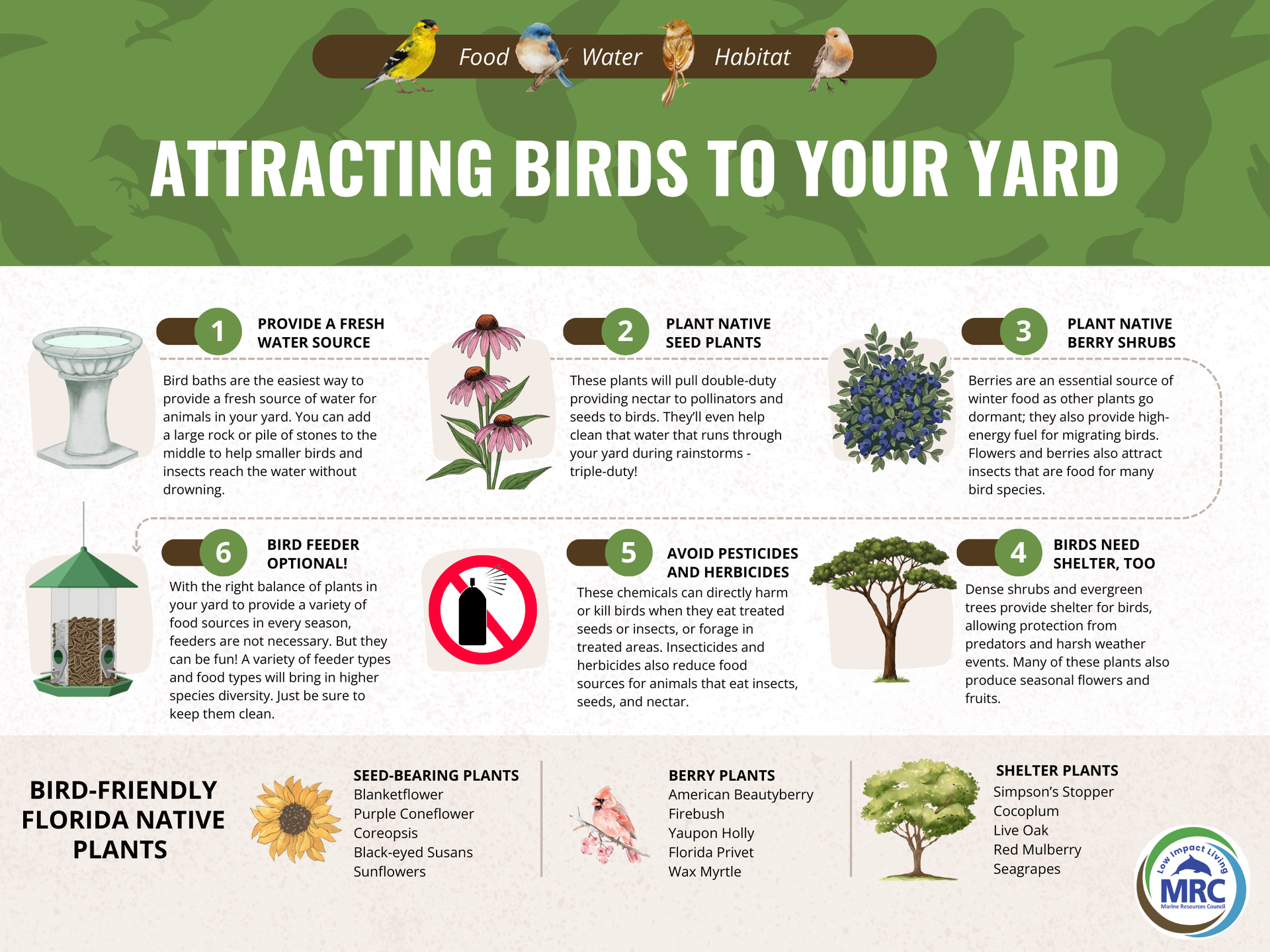
You might have noticed the newsletter is looking a bit bird-themed this month. We kept that theme going with our Low Impact Living Tip of the Month, sharing ways you can attract native Florida birds to your yard. With Spring migrations around the corner, there's no time like the present to add a few bird-friendly features to your yard! |
|
|
| Where in the Lagoon is MRC? |
Click on the links below to learn more information! |
March 28 - Staff busy around the Lagoon! |
March 2 - International LID Conference, Jessica Cline March 4 - Indialantic Rotary Club, Dr. Laura Wilson |
|
|
Each month, we'll share TV specials and news articles that feature Marine Resources Council staff. Find February's media features linked below. |
|
|
| Want to stay informed about how your donation is making a difference? Follow us on socials! |
|
|
Thank you for supporting the Marine Resources Council! |
|
|
3275 Dixie Hwy NE, Palm Bay, FL 32905, USA |
|
|
|