35 years of citizen science |
Before anyone could undertake meaningful restoration of the Indian River Lagoon, someone first had to show just how much trouble it was in—and that work started with volunteers. By the 1980s, nonprofits and government agencies were organizing to tackle the stormwater and wastewater problems plaguing the Lagoon, but real progress required hard data and a clear baseline. Community members recognized that there needed to be more science and that they had an important role to play. In June 1991, volunteers from across the Lagoon region underwent training to begin collecting weekly water quality data—data essential for understanding water degradation and measuring restoration success. MRC served as the organizing and analytical leaders while the Florida Department of Environmental Protection (FDEP; then the Florida Department of Environmental Regulation) and the newly formed Indian River Lagoon National Estuary Program (IRLNEP) funded the initial equipment. By the end of that same month, the first data point had been submitted—by a citizen scientist in Cocoa. |
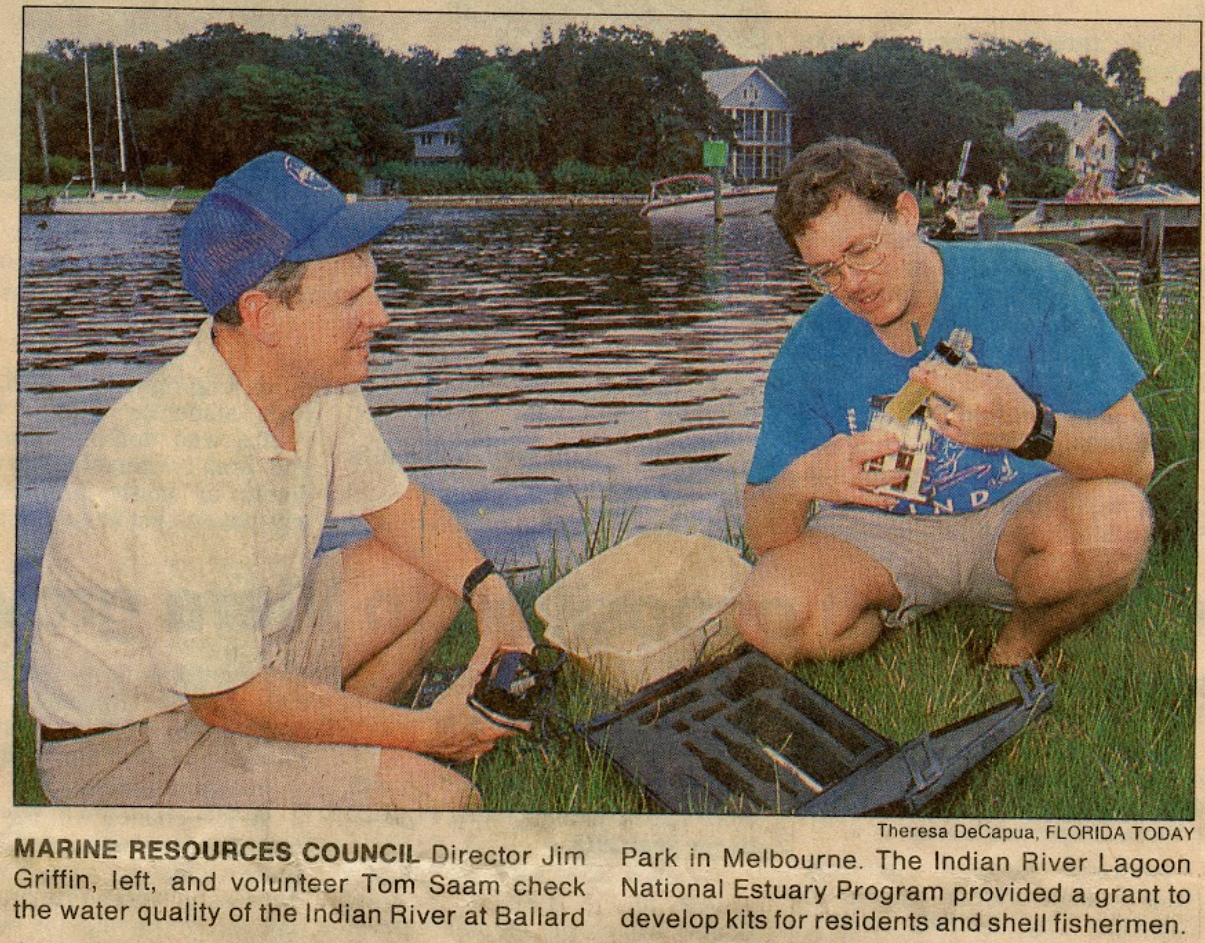
Fun Fact: Tom Saam (pictured above) is still a LagoonWatch monitor and is our only monitor who has volunteered through the entire 35-year history of the program! |
Data Collection: Now & Then |
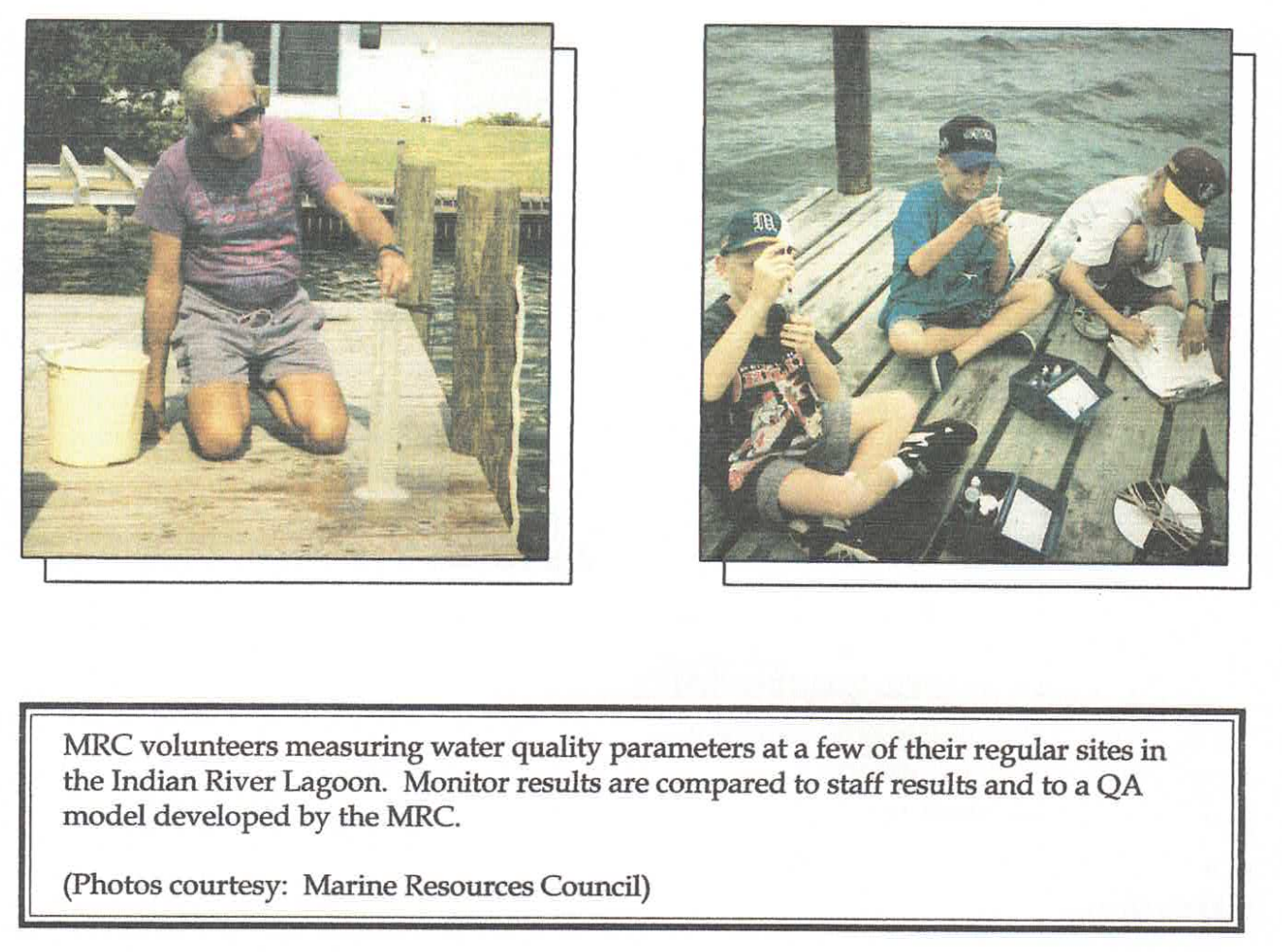
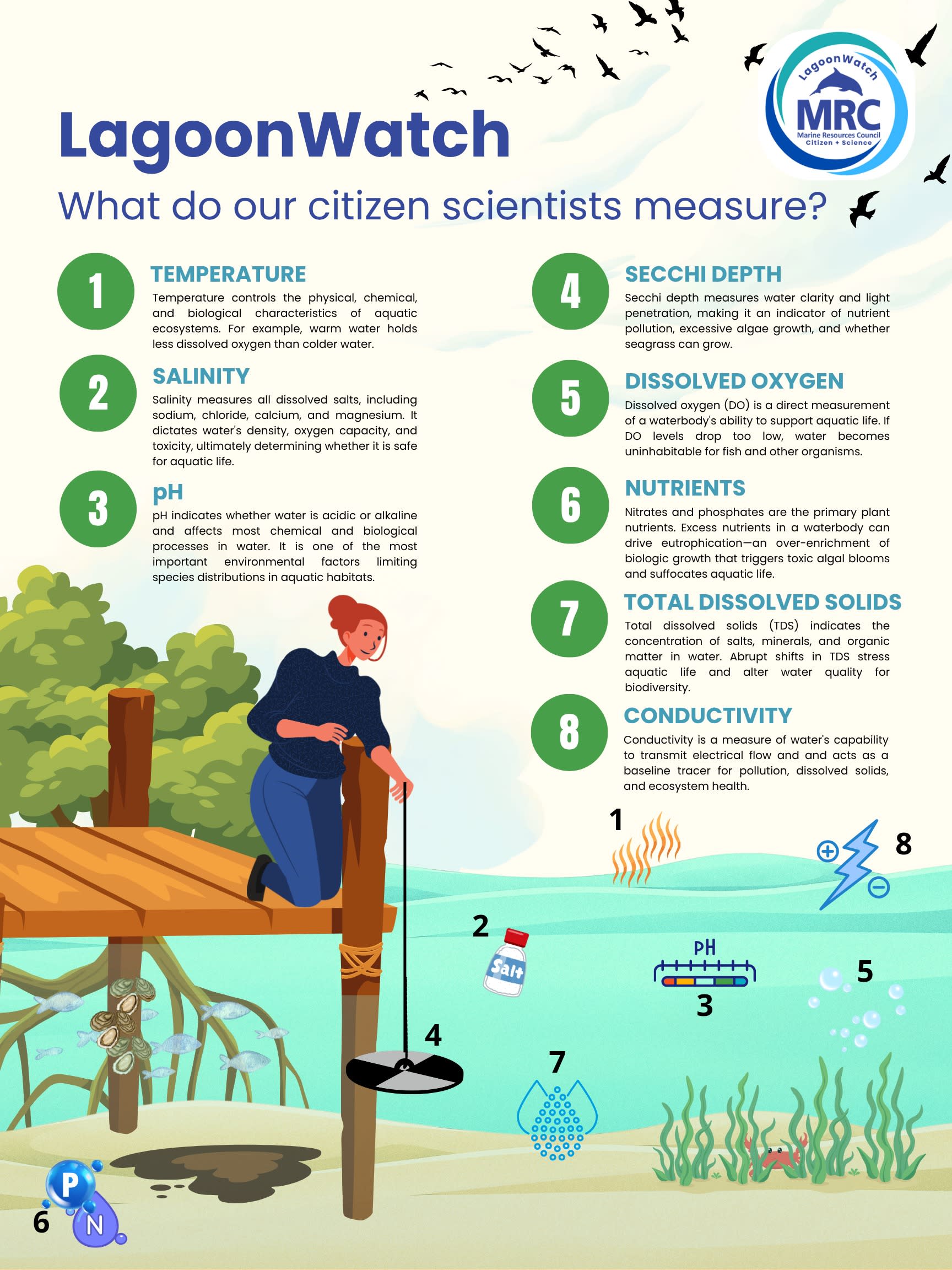
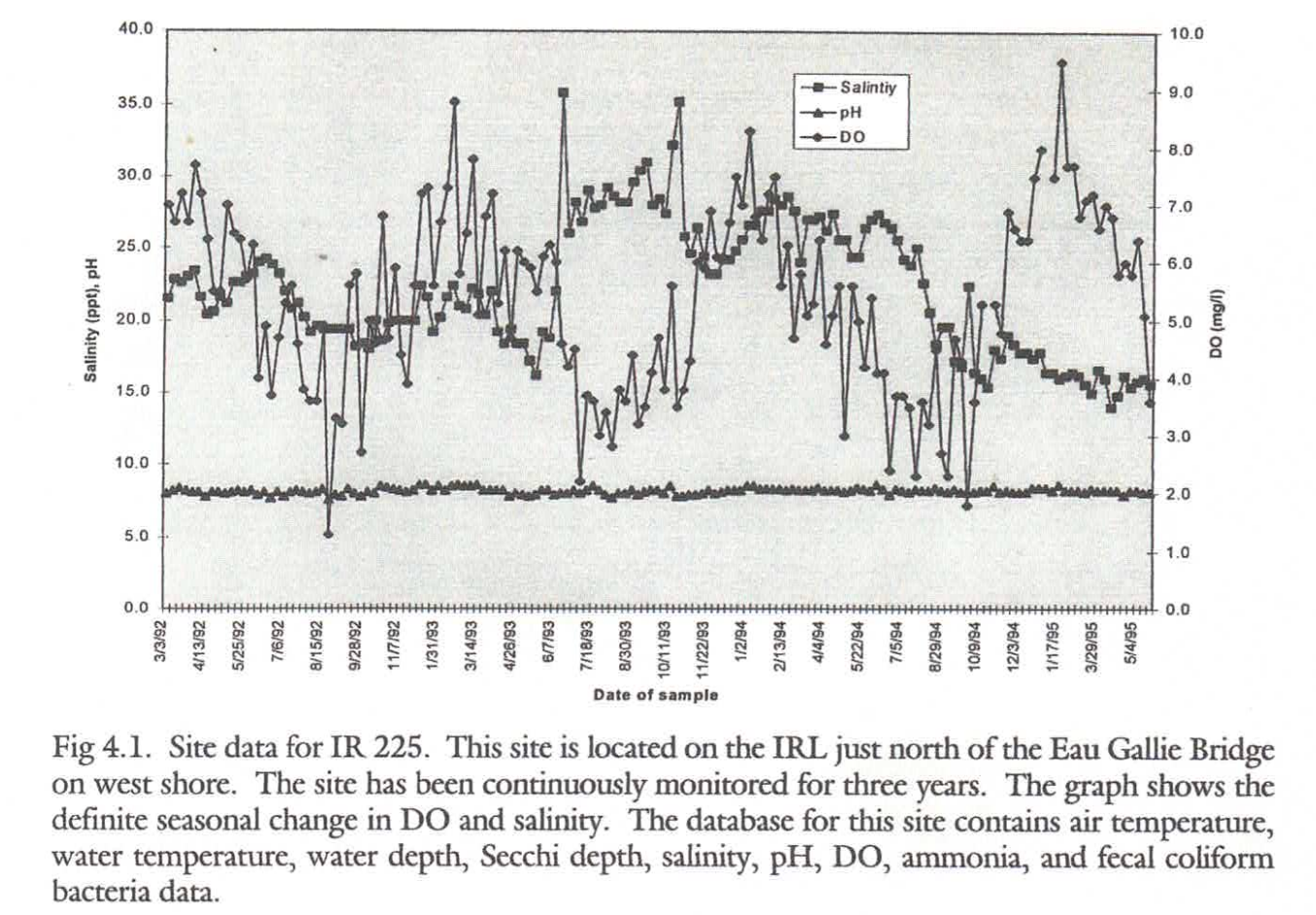
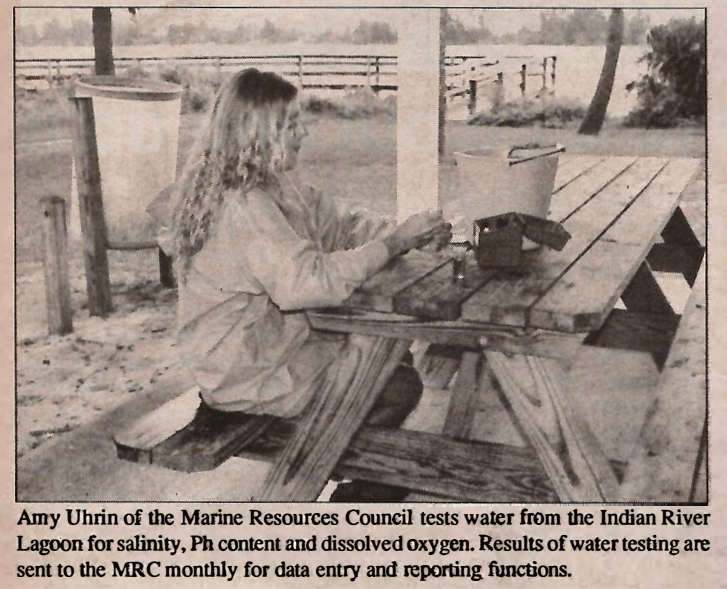
Water quality testing started with 75 sites spread across the Indian River Lagoon (including the Mosquito Lagoon and Banana River Lagoon) where citizen scientists gathered dissolved oxygen, salinity, water clarity, water temperature, and pH metrics. Volunteers transformed into chemists to measure these parameters using chemical reactions. While these methods were state-of-the-art in the 1990s, they eventually became outdated and science moved to digital devices. As a result, LagoonWatch data were no longer accepted into the state database (now known as WIN - the Watershed Information Network). This meant we needed to upgrade our methods and equipment to ensure our citizen scientist were making the biggest impact possible. |
In 2025, we started the long-needed LagoonWatch update. With funding from private donations, we were able to provide monitors with state-approved digital probes that collect temperature, salinity, pH, total dissolved solids, and conductivity data. An IRLNEP Small Grant allowed us to provide nutrient (nitrogen and phosphorus) testing kits to monitors. With a second IRLNEP Small Grant and private donations, we're reintroducing dissolved oxygen testing later this year (DO require a second, much more expensive digital probe to meet quality control standards). |
Fun Fact: In 1991, a water quality monitoring kit ran $250/kit and a bacteria monitoring kit ran $150/kit. Combined, that's almost $1000 in today's dollars. |
The number and location of sites has changed over the decades, but reporting results has always been a fundamental part of LagoonWatch and MRC's science communication objectives. From the beginning, water quality data were reported weekly to MRC and to what is now known as the FDEP. MRC also produced quarterly LagoonWatch reports so that monitors, community members, and government officials could track site-specific trends and anomalies. As datasets grew, so did our ability to understand what was changing and why. |
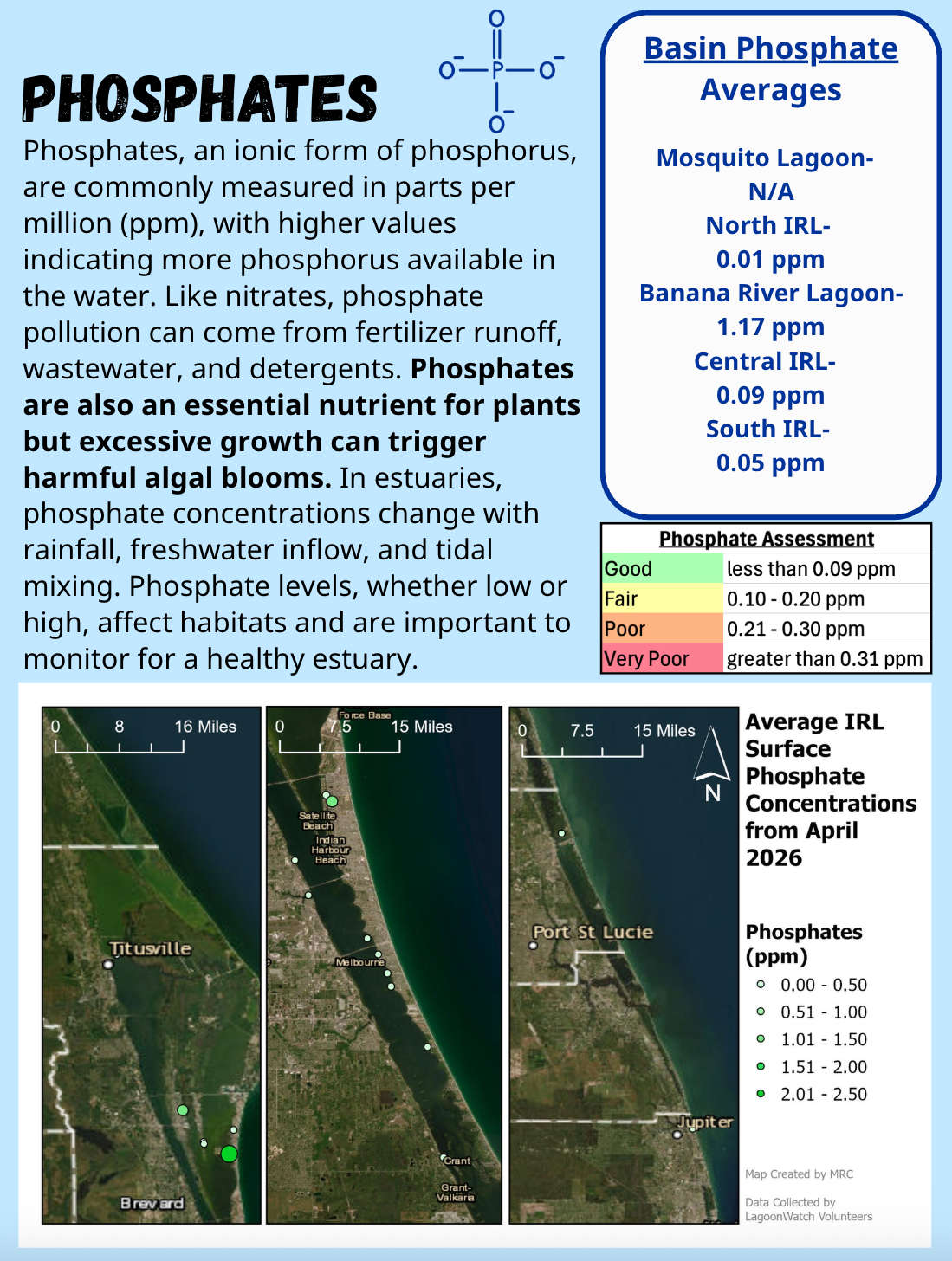
While MRC has always compiled LagoonWatch data, the amount data that could be shared with the state (via WIN - the Watershed Information Network) was impacted as methods became outdated. Eventually, only water clarity (secci depth) was consistently shared. However, with our recent upgrades, our citizen scientist's data are more impactful than ever. Not only are data submitted to WIN for use in research and decision-making, but we have resumed sharing water quality reports in our newsletter. This not only broadens the reach of LagoonWatch data, but means that data can be incorporated into our annual Indian River Lagoon Health Report (since we gather water quality data from WIN) and used in educational programs. The image from one of our monthly LW reports below shows how our reporting to the public has modernized. After a year of collecting data using our new methods, we can start mapping trends across the Lagoon! |
LagoonWatch has a storied past and a bright future. The need for consistent monitoring hasn't gone away and we don't plan to stop LagoonWatch any time soon. Now, more than ever, we need to be able to measure progress and make data-informed decisions about restoration and policy. Over the next year, we're reintroducing dissolved oxygen testing with new digital probes at LagoonWatch sites in every basin across the Lagoon. MRC staff and interns are analyzing historical LagoonWatch datasets to uncover 35 years of water quality trends. And the 2026 Indian River Lagoon Health Report will include LagoonWatch site data in addition to basin averages so we can display large scale and small scale changes in habitat health. Looking farther ahead, we plan to recruit additional monitors in the southern half of the Lagoon for more uniform data collection and reporting. We are also working with partners to bring continuous bacteria (E. coli) monitoring to the Lagoon. Together, these improvements will help inform decision-making while protecting the health of both humans and wildlife. |
LagoonWatch Is Made Possible By You |
Although original funding for LagoonWatch came from the state, with occasional grants for expansions or updates, this program is now mostly funded out of MRC's annual budget. And MRC is predominantly powered by donations. Keeping LagoonWatch running costs MRC around $50,000/year. This includes equipment, chemicals, volunteer training, data upload and analysis, and reporting. Producing the Indian River Lagoon Annual Health Report (which is published under LagoonWatch) costs another $18,000/year. Help us build on the powerful legacy of LagoonWatch by making a donation today. |
|
|
|